
Developed with the support of the Fonds de Dotation Maison Mode Méditerranée (MMM) Research Grant 2024 – 2026, Archival Itineraries: Tracing the Colonial Archives of Italian Fashion is a self-published, limited edition visual essay and publication project that documents the methodology of my research into Italian fashion, Italian colonialism, craft, and material culture. Rather than presenting the book as a conventional research monograph, I conceived it as a visual research journal: a format through which archival encounters, objects, images, and methodological reflections could be assembled in a more open, layered, and process-oriented form.
The publication emerged from my MMM-funded research project, Between the Folds: Untold Histories of Fashion, Crafts and Style in the Colonial Archives of Fascist Italy, which investigates the visual and material traces of Italian colonialism in Italian fashion culture. At the centre of this research is a broader question: how can fashion studies account for the colonial histories embedded not only in images and representations, but also in objects, materials and institutional collections?
Positioned within a broader methodological conversation on archival ethnography, the project treats archival research not only as the consultation of historical documents, but as an ethnographic engagement with archival sites, institutional arrangements, classification systems, and the situated interpretation of records, images, and objects. In my project, experimental archival ethnography brings together archival research, visual analysis, object-based inquiry, and critical reflection on the conditions under which archives become accessible, legible, and meaningful. This approach is also informed by anthropological approaches to archives as both sources and fields of inquiry and by Ann Laura Stoler’s writings on colonial archives as sites where knowledge, power, and racial categories were produced. Rather than treating archives as neutral repositories of historical fact, it attends to the ways in which colonial collections were assembled, ordered, preserved, and made available for research. It therefore requires attention not only to documents, images, and objects, but also to access conditions, institutional histories, absences, and the researcher’s own position within the archive.
In practical terms, this meant moving between libraries, museum deposits, photographic collections, historical fashion magazines, colonial-era publications, and material artefacts. The research followed garments, craft objects, photographs, animal skins, accessories, printed images, and textual traces across different institutional contexts. This movement across sources was not simply a matter of gathering evidence. It became a way of understanding fashion as a field in which colonial histories were made visible, desirable, and consumable through materials, techniques, display practices, and visual languages.
A crucial dimension of the project was its shift from the analysis of visual representation to object-based research. Earlier stages of the research began with images: photographs, book covers, magazines, and visual traces of colonial encounters. Over time, however, the project moved toward the material objects themselves. This shift also informed my article “Untold Histories of Fashion, Crafts, Artisanship, and Style in the Archives of Italy’s Former Colonial Museum in Rome,” published in the Journal of Design History, in which I examine artefacts connected to Italy’s former Colonial Museum as material evidence of fashion, craft, and colonial collecting. Working with these objects made it possible to ask different questions: how were materials selected, transformed, classified, stored, and displayed? What kinds of colonial relations were condensed into garments, accessories, furs, and craft objects? And what happens when fashion is approached not only as representation, but as a material field shaped by extraction, circulation, labour, and institutional afterlives?
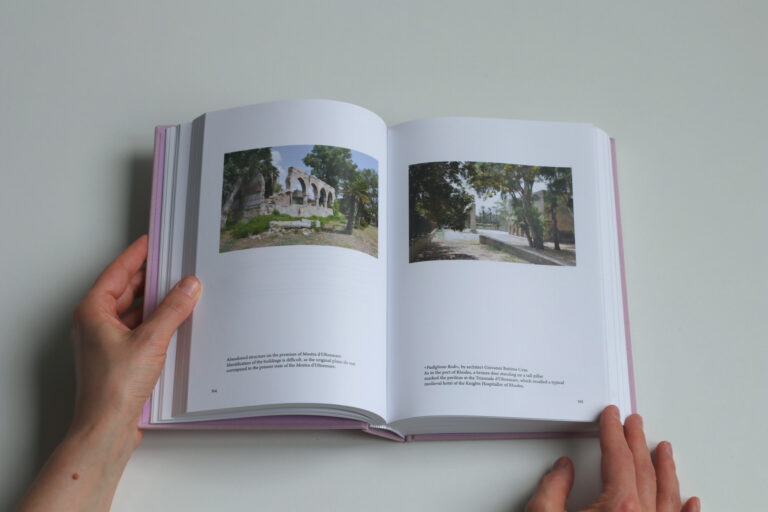
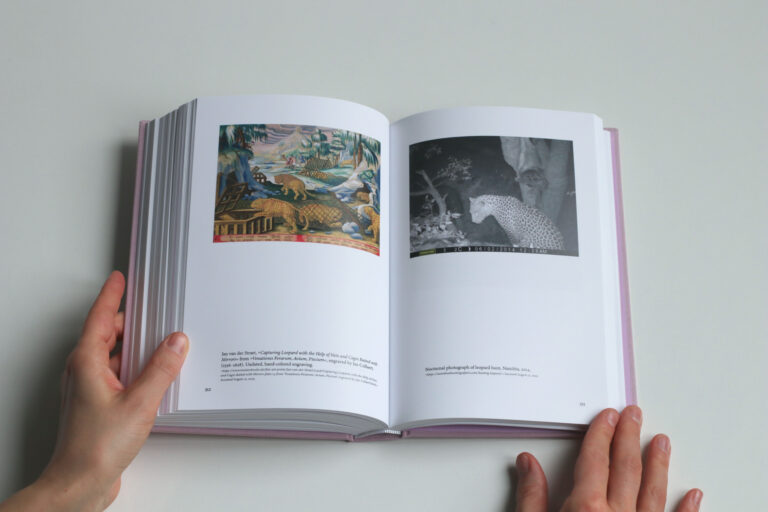
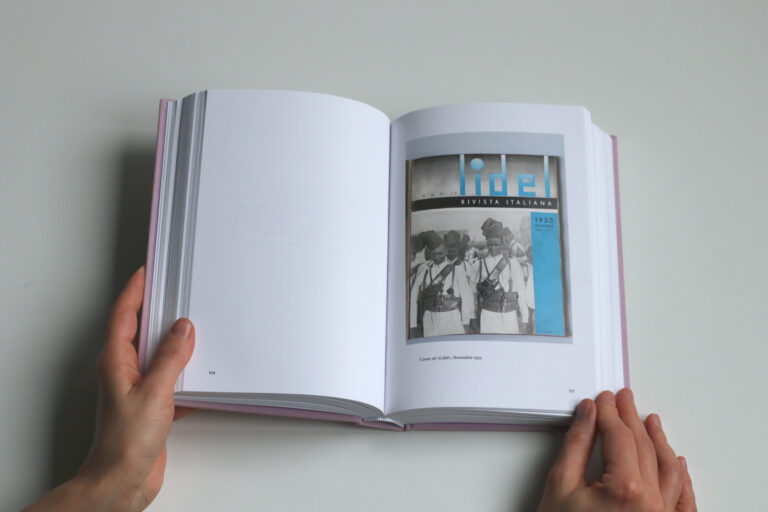
This object-based approach was central to the development of Archival Itineraries. The publication does not aim to reproduce the archive as a stable body of evidence. Instead, it documents a research process: the routes through which materials were found, the visual associations that emerged, and the methodological decisions that shaped the project. It brings together archival images, photographs, ethnographic fieldnotes, references, and visual constellations in order to show how the research unfolded across different sites and media. In this sense, Archival Itineraries is best understood as a visual research journal: a publication that records the itinerant, partial, and materially grounded nature of archival research.
My work builds on a well-established tradition of object-based research in fashion and dress studies, including Valerie Steele’s reflections on object interpretation, Giorgio Riello’s methodological work on the object of fashion, and Ingrid Mida and Alexandra Kim’s practical model of the “dress detective.” Extending these approaches to Italy’s colonial fashion archives, I have come to understand object-based inquiry not as an optional supplement, but as a necessary precondition for historical decolonial fashion studies.
By centring analysis on actual objects, this approach makes it possible to produce more accurate and analytically incisive scholarship, because it confronts the specific cultural, political, social, and historical contexts in which objects were made, circulated, classified, displayed, and consumed. With colonial objects in particular, it is essential to consider how regional and global histories are interwoven, and to trace the continuation of these trajectories across postcolonial iterations.
The term “itineraries” is important here. It refers first to the concrete routes of the research itself: the movement between archives, museums, libraries, and collections. But it also refers to the routes taken by objects, materials, and images: from colonial extraction and museum collection to fashion media, luxury culture, and contemporary visual memory. Fashion objects rarely remain in one place or retain one meaning. They circulate through trade, display, reproduction, consumption, and re-interpretation. By following these itineraries, the project asks how colonial histories continue to surface in fashion’s material and visual cultures.
At the same time, the research required a reflection on my own position as a researcher. As a white Italian woman, I encountered relatively few difficulties in accessing the archival and museum spaces in which this material is held. This access cannot be considered neutral. The ease with which I could enter these spaces, request material, and move through institutions is itself connected to the histories of privilege and belonging that shape archival research. I do not foreground this point in order to centre myself, but because any research on colonial archives must also acknowledge the conditions of access through which such research becomes possible.
The MMM scholarship was crucial in allowing this body of work to develop across formats.
Cover of Archival Itineraries: Tracing the Colonial Archives of Italian Fashion by Monica Titton, self-published limited-edition publication. Designed and typeset by Elias Milcic.
Photograph by Elias Milcic.
Pages from Archival Itineraries: Tracing the Colonial Archives of Italian Fashion by Monica Titton, self-published limited-edition publication. Designed and typeset by Elias Milcic.
Photograph by Elias Milcic.
[1] Stephanie Decker and Alan McKinlay, “Archival Ethnography,” in The Routledge Companion to Anthropology and Business, ed. Raza Mir and Anne-Laure Fayard (New York: Routledge, 2021), 18–33.
[2] David Zeitlyn, “Anthropology in and of the Archives: Possible Futures and Contingent Pasts. Archives as Anthropological Surrogates,” Annual Review of Anthropology 41 (2012): 461–80, https://doi.org/10.1146/annurev-anthro-092611-145721.
[3] Ann Laura Stoler, “Colonial Archives and the Arts of Governance,” Archival Science 2, nos. 1–2 (2002): 87–109; Ann Laura Stoler, Along the Archival Grain: Epistemic Anxieties and Colonial Common Sense (Princeton, NJ: Princeton University Press, 2009).
[4] Monica Titton, “Untold Histories of Fashion, Crafts, Artisanship, and Style in the Archives of Italy’s Former Colonial Museum in Rome,” Journal of Design History 38, no. 3 (September 2025): 299–312, https://doi.org/10.1093/jdh/epaf021.
[5] Valerie Steele, “A Museum of Fashion Is More Than a Clothes-Bag,” Fashion Theory 2, no. 4 (1998): 327–35; Giorgio Riello, “The Object of Fashion: Methodological Approaches to the History of Fashion,” Journal of Aesthetics & Culture 3, no. 1 (2011): 1–9; Ingrid Mida and Alexandra Kim, The Dress Detective: A Practical Guide to Object-Based Research in Fashion (London:Bloomsbury Academic, 2015).
References and related outputs
Decker, Stephanie, and Alan McKinlay. “Archival Ethnography.” In The Routledge Companion to Anthropology and Business, edited by Raza Mir and Anne-Laure Fayard, 17–33. New York: Routledge, 2021.
Mida, Ingrid, and Alexandra Kim. The Dress Detective: A Practical Guide to Object-Based Research in Fashion. London: Bloomsbury Academic, 2015.
Riello, Giorgio. “The Object of Fashion: Methodological Approaches to the History of Fashion.” Journal of Aesthetics & Culture 3, no. 1 (2011): 1–9. https://doi.org/10.3402/jac.v3i0.8865.
Steele, Valerie. “A Museum of Fashion Is More Than a Clothes-Bag.” Fashion Theory 2, no. 4 (1998): 327–35. https://doi.org/10.2752/136270498779476109.
Stoler, Ann Laura. “Colonial Archives and the Arts of Governance.” Archival Science 2, nos. 1–2 (2002): 87–109.
Stoler, Ann Laura. Along the Archival Grain: Epistemic Anxieties and Colonial Common Sense. Princeton, NJ: Princeton University Press, 2009.
Titton, Monica. Archival Itineraries: Tracing the Colonial Archives of Italian Fashion. Self-published visual essay / research publication, 2026.
Titton, Monica. “Monte di Pietà: Monte di Pietà by Christoph Büchel, Fondazione Prada, Venice, Italy, April 20 to November 24, 2024.” Fashion Theory, February 2025, 1–10. https://doi.org/10.1080/1362704X.2025.2466387.
Titton, Monica. “The Temporalities of Leopard: Fashion’s Material Culture in the Archives of Italian Colonialism.” In Craft of Fashion: Temporalities, edited by Émilie Hammen. Paris: Éditions B42, forthcoming 2026.
Titton, Monica. “Untold Histories of Fashion, Crafts, Artisanship, and Style in the Archives of Italy’s Former Colonial Museum in Rome.” Journal of Design History 38, no. 3 (September 2025): 299–312. https://doi.org/10.1093/jdh/epaf021.
Zeitlyn, David. “Anthropology in and of the Archives: Possible Futures and Contingent Pasts. Archives as Anthropological Surrogates.” Annual Review of Anthropology 41 (2012): 461–80. https://doi.org/10.1146/annurev-anthro-092611-145721.
Publication note
This limited-edition publication is conceived as an experimental research object documenting archival investigations into Italian fashion and colonialism. It is intended for scholarly reflection and methodological documentation, complementing peer-reviewed publications arising from this research. It is not produced for commercial sale or digital dissemination